


Burnout Prevention & Nervous System Resilience Program
Burnout doesn’t begin when someone crashes
Most people treat burnout as a time-management problem.
It’s not.
It’s a nervous system, metabolic, and cognitive load problem.
It begins in the small moments:
poor sleep,
shallow breathing,
brain fog,
irritability,
decision fatigue,
disconnection from your body.
This program addresses burnout at the root through The S.P.A.C.E Method
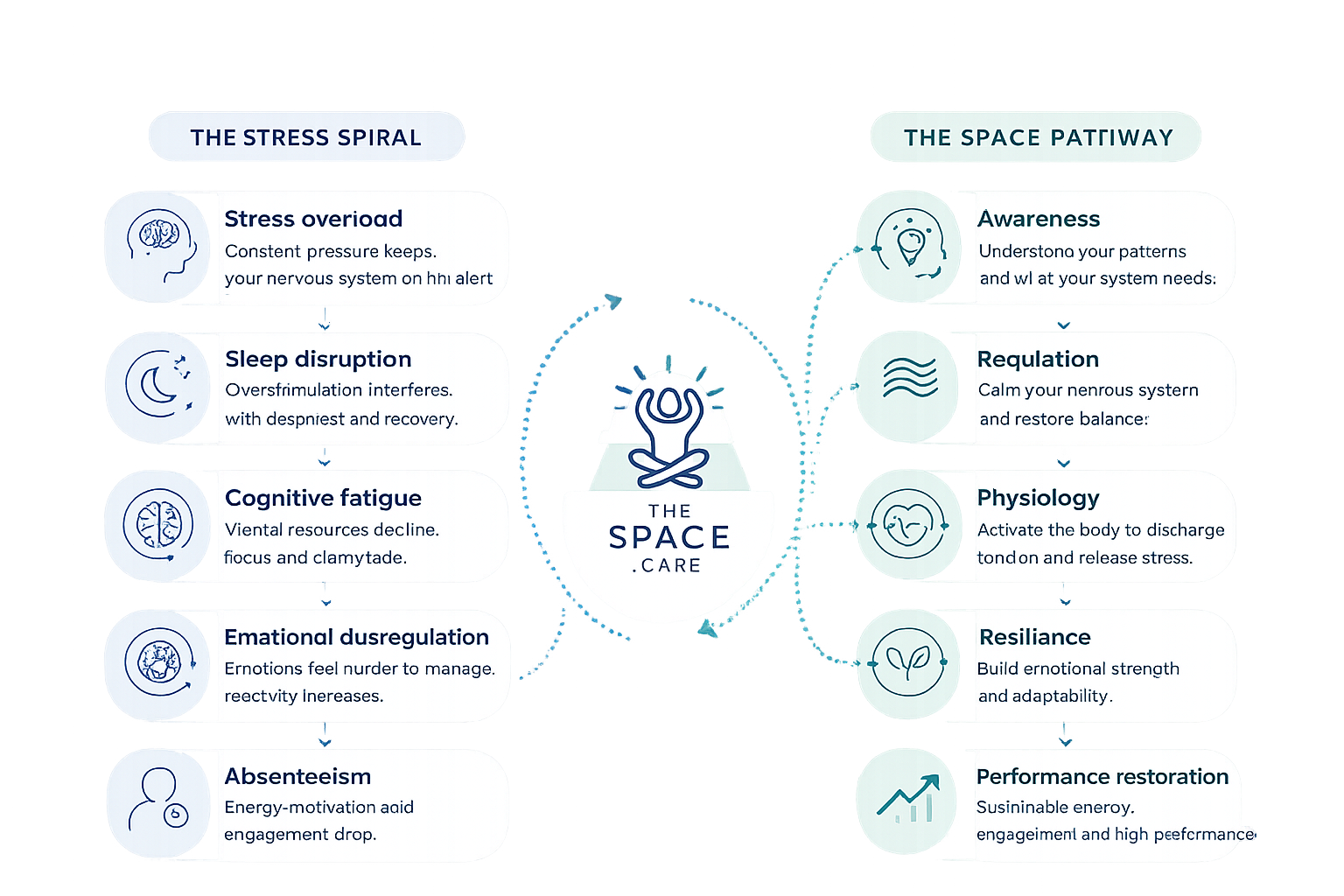
Our program is a science-backed, experiential learning experience designed for high-performing teams
-
1. Awareness
Understanding burnout and chronic stress
-

2. Regulation
Breathwork and mindfulness
-

3. Physiology
Nutrition and metabolic stability
-

4. Cognition
AI, focus, leadership, overload
-

5. Behavior
Communication and boundaries
-

6. Embodiment
Movement and physical resilience
The S.P.A.C.E framework specifically designed for modern workplace pressure.
TheSpace.Care has designed as an experiential learning journey combining expert insight with direct integration:
6 Expert Talks (45 minutes each)
6 Guided Practice Sessions (30 minutes each)
Opening & Closing Integration Sessions
Each talk provides understanding, while each practice session allows participants to integrate learning through direct nervous‑system experience.
Offered both in person and online, in English and French
Our Burnout Prevention Program Layers
-
Burnout is the result of prolonged nervous system overload, not a sudden event. This session helps participants understand how stress accumulates, how it impacts the brain and body, and how to recognize early warning signs before performance and health decline.
Key focus areas:
Stress as a biological survival response and the role of the nervous system
How acute stress becomes chronic through ongoing cognitive and emotional load
Impact on focus, energy, motivation, and emotional regulation
Early warning signs across emotional, physical, and cognitive levels
Why prevention through awareness, regulation, and recovery is more effective than reactive solutions
-
This session focuses on how to regulate stress in real time using simple, work-compatible tools. Participants learn how breath and mindfulness can improve focus, emotional balance, and resilience without adding extra effort.
Key focus areas:
Why willpower and mindset alone are not enough to manage stress effectively
Breath as a fast, practical tool to regulate stress in real time, even during meetings
Mindfulness as a way to create space between stimulus and response under pressure
Simple practices to improve focus, emotional regulation, and recovery throughout the workday
How small, consistent micro-practices support sustainable performance and resilience
-
Under stress, communication shifts — tone sharpens, misunderstandings increase, and conflict escalates. This session helps participants understand how stress impacts communication and how to move from reactive patterns to more intentional, regulated responses.
Key focus areas:
How stress narrows perception and distorts communication under pressure
The difference between reacting and responding, and the role of pause and self-regulation
Common stress-driven patterns such as people-pleasing, avoidance, or emotional reactivity
Practical tools to communicate clearly, reduce escalation, and navigate difficult conversations
Setting boundaries as a way to protect energy, focus, and working relationships
-
This session explores how AI and digital environments are reshaping attention, decision-making, and professional identity. Participants learn how to reduce cognitive overload and use AI in a more intentional, sustainable way.
Key focus areas:
Cognitive overload in modern work and its impact on focus, decision-making, and performance
The shift from automation (more, faster) to augmentation (clearer, more intentional thinking)
How unstructured AI use increases cognitive load and contributes to burnout
Agentivity and intentionality: staying in control of decisions, attention, and thinking
Practical reflection on boundaries, focus, and healthier ways of working with AI
-
Under stress, communication shifts — tone sharpens, misunderstandings increase, and conflict escalates. This session helps participants understand how stress impacts communication and how to move from reactive patterns to more intentional, regulated responses.
Key focus areas:
How stress narrows perception and distorts communication under pressure
The difference between reacting and responding, and the role of pause and self-regulation
Common stress-driven patterns such as people-pleasing, avoidance, or emotional reactivity
Practical tools to communicate clearly, reduce escalation, and navigate difficult conversations
Setting boundaries as a way to protect energy, focus, and working relationships
-
Sitting, stress, and repetitive work patterns place continuous strain on the body. This session helps participants understand how physical tension develops and how simple, practical movement can restore energy, reduce pain, and support long-term resilience.
Key focus areas:
Why physical discomfort is not just about posture, but about lack of movement variability
How prolonged sitting and desk work create muscular imbalances, tension, and fatigue
The connection between physical tension, energy levels, and nervous system regulation
Simple, practical exercises and stretches to release tension and improve mobility during the workday
How small, regular movement breaks support focus, reduce discomfort, and improve overall performance
Because Burnout Isn’t Solved by Perks.
Our method works because it addresses the root:
Regulates stress at the body and nervous system level
Rebuilds emotional resilience and focus
Restores trust and connection in teams
Meditation apps, gym discounts, and fruit baskets don’t rebuild a nervous system under pressure.
How it works
Designed for integration, not information overload
Assessment
Understand your team’s needsImplementation
Launch program or credit systemPractice
Weekly integration sessionsSupport
Ongoing access to practitionersMeasure
Track engagement and impact
Burnout isn’t going away on its own. But your company can choose a different future.
Imagine your people re-energized, focused, and committed again.
That’s what TheSpace.Care delivers.